

Why procurement shouldn’t be based on social value
Analysing the Government’s procurement policy changes

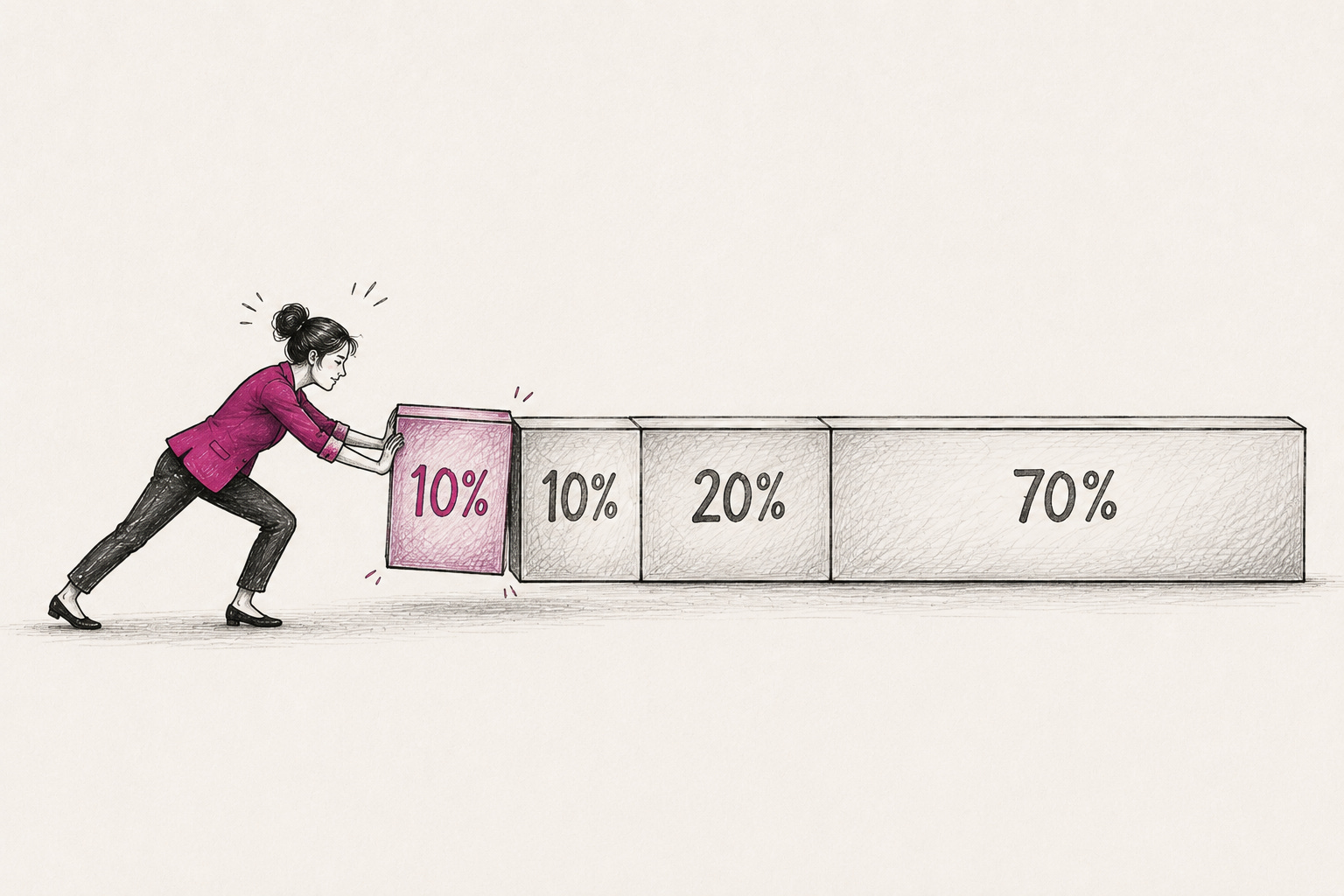
When does a 10% change make all the difference? When it’s to the ‘social value’ measurement used in procurement decisions.
Overnight The Guardian and The Financial Times are reporting that Louise Haigh has written to other Ministers proposing a big overhaul of the most important part of the procurement rules that you’ve never heard of: the ‘social value’ regime.
But there’s been a lot of confusion about what the ideas would mean in practice, so we’ve written an explainer. The Government have since updated the language in Procurement Policy Note 026, the guidance on how social value policy works in practice, and we’ve taken a look through. On the face of it, these are a big set of changes – some of which are positive, and one of which is really quite concerning.
If you don’t know what ‘social value’ is, a quick bit of background. When the public sector puts out a tender for bids, 10% of the ‘marks’ normally get awarded based on whether companies can show they meet various ‘social value’ criteria. The other marks are for price (usually 20-30%) and quality (usually 60-70%). There’s a whole gamut of guidance on these criteria, which required companies to prove they are things like carbon-neutral, moving jobs outside of London, revitalising high streets, DEI, and many more. These might all be important objectives to the Government, but furthering them all through procurement distracts companies from delivering the core purpose of the contract, and adds cost – a phenomenon we call Everythingism’.
Social value rules are particularly bad for small companies who get priced out of selling to the public sector because the overheads become so high, so they don’t compete at all – making the market much more concentrated in the long run. And we can’t stress enough how uncompetitive procurement markets are: 20% of contracts government lets have one or even zero companies bidding for them.
Taking the changes in turn:
First, the Government seem to have entirely removed social value obligations from contracts under £1 million in value – meaning that the 10% weighting there won’t apply at all. That’s great – it creates a pipeline of contracts which are much more accessible to small companies. As we called for in our paper Procure and simple, giving small companies routes to bypass social value to win work is essential – the system is just too intensive for them to at that small scale.
Then for contracts valued at over £1 million, the Government have cut several social value objectives from the long list, and focused on a smaller number of categories: higher paying jobs, apprenticeships, and routes for NEETs into work. This is an improvement, not just because the list is shorter but also because these are easier objectives for companies to target, measure and quantify than the vaguer and more unrealistic goals which are coming off the list. Annex A lists six categories in total, down from dozens in previous guidance.
But, frustratingly, for contracts above £5 million in value the Government are increasing the minimum weighting for social value from 10% to 20%. That is a mistake, and will mean more contracts are delivered at lower quality and higher cost – because that extra 10% of marks has to come from one of those two measures, and ultimately it’s a trade-off. Now, given the set of metrics which this 20% of marks will be awarded on are significantly shortened, that does slightly mitigate the negative impact. And defence and security contracts still have an exemption from needing to use social value at all, based on Section 7 of the Procurement Act 2023. But it’s easy to underestimate the scale of this change. Lots of contracts are above £5 million in value. Of the 14,679 contracts listed on Find a Tender this morning, 4,335 contracts are above £5 million in value – roughly 1/3, and it’s through these that most procurement spending will happen.
So actually, despite taking smaller companies out of the social value rules, overall the government is extracting much more ‘social value’ from companies. But that’s a common mistake policymakers make when playing with this policy – it isn’t the companies who pay the price – they just add the cost of any social value requirements into the cost of doing business, and charge it back to the government. So the taxpayer still pays the cost of more training courses, or apprenticeships, it just does it a very inefficient way – through the procurement bill.
It’s important the Government reverses this dangerous and unworkable policy, which will only continue to bloat procurement budgets and deliver worse quality contracts, all in the name of furthering employment outcomes for young people which have much better solutions than this. I worry that the Government have seized on using procurement rules to do this because it feels like a ‘free win’, even if in practice there are lots of costs, they’re just borne by all departments in ways which are hard to track.
One final point which isn’t in the PPN. The reports say that the Cabinet Office have also asked departments to each draw up a list of 10 high-growth companies to target for more contracts.
We called for a similar approach in Procure and simple because the distortions against startups and scaleups entering the procurement market are so extreme that you do need a counterbalance, and to focus on ways you give more contracts to them for innovative new products. The biggest problem with procurement policy is that it’s entirely ‘buyer-led’ – contracts which government puts out to solicit bids for. There’s basically no route for a company offering a genuinely innovative new product to come and sell it into the public sector – which massively hampers startups and scaleups. There’s plenty more they could do to eases the path for high-growth companies – for example, more targeted direct awards for innovative products, or exempting them entirely from social value weightings on contracts of any value (both possible under the current Procurement Act).
It’s essential the government take procurement reforms seriously, and the move to 20% social value scores is a big cause for concern. Procurement rules govern over £300 billion of the economy. There’s a huge opportunity to free up the red tape stops British companies growing, and also stops them becoming great exporters to other governments because they can’t even get a foothold working for their own Government here at home.
Thanks for this analysis. Is "higher paying jobs" a proxy for higher productivity/technology usage? Surely you can't have one without the other?